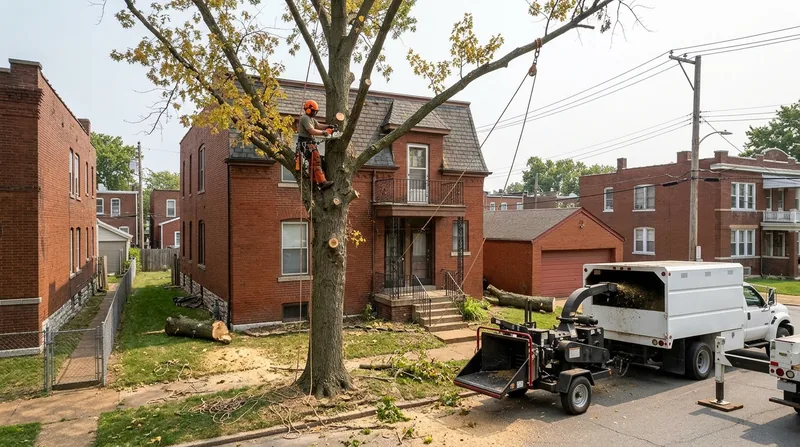




St. Louis homeowners face a unique set of tree challenges rooted in our dense urban canopy and aging residential stock. From the narrow brick rowhouses of Soulard and Lafayette Square to the sprawling brick bungalows of St. Louis Hills and the wooded ridge lots of West County, trees grow close to homes, power lines, and fences. Pin oak, silver maple, sycamore, and declining ash trees dominate our landscape, and when they fail, they threaten structures, utilities, and safety. Tree removal in St. Louis requires precision, local knowledge, and the right equipment to navigate tight spaces, limestone-laden soil, and complex property layouts. We remove hazardous, dead, and unwanted trees of any size, handling everything from simple takedowns to complex removals near homes and overhead power drops. Call us at (636) 556-6253 for a free estimate, or visit our contact page to request service today.
Why Tree Removal Matters in St. Louis: Protecting Your Property and Safety
St. Louis's brick urban core and suburban neighborhoods depend on mature trees for shade and character, but those same trees become liabilities when they decline, split, or lean toward homes and garages. Our clay soil, limestone bedrock, and steep bluffs along the Meramec create unstable root systems, especially in trees stressed by drought, disease, or storm damage. Ash trees killed by emerald ash borer, silver maples weakened by age, and storm-damaged pin oaks create immediate hazards. Removing these trees before they fail protects your home, your neighbors' property, and pedestrian safety on sidewalks and in alleys.
- We identify dead, diseased, or structurally compromised trees that pose immediate risk to homes, fences, and power lines.
- We obtain local tree removal permits required in Clayton, Kirkwood, Webster Groves, Ladue, and other municipalities with heritage tree ordinances.
- We work with HOAs and neighbors to navigate property line rules and visible removal approvals in gated communities and private places.
- We clear trees blocking views, crowding foundations, or damaging underground utilities and drainage systems.
Prompt removal prevents costly structural repairs, foundation cracks, and liability claims when branches or trunks fail unexpectedly.
Key info: Many St. Louis suburbs enforce tree removal permits for trees above 8 to 12 inches in diameter. Protected oak, redwood, and heritage trees may require city approval or a experienced arborist assessment before removal. Check your city's ordinance or call us to confirm permit requirements for your property. The City of St. Louis publishes tree ordinance guidelines at stlouis-mo.gov.
How We Remove Trees in St. Louis: Step-by-Step Process and Local Examples
Our removal process begins on site, where we assess tree size, species, health, proximity to structures, and access constraints unique to St. Louis properties. Brick rowhouses with narrow gangways, detached garages on rear alleys, and overhead power drops on wooden poles demand careful planning and rigging. We use felling, sectional dismantling, and crane access depending on the job. Every removal includes debris cleanup and hauling, leaving your property clear and safe.
- We arrive with a free site inspection to measure tree height, assess lean and branch structure, and identify hazards or space constraints.
- We determine the safest removal method: felling in open space, sectional rigging near homes and fences, or crane lift for large trees over structures.
- We cut the tree into manageable sections, lower them safely using ropes and pulleys, and load debris into our trucks for disposal.
- We clear all branches, limbs, and stump debris from your yard, leaving the area clean and ready for landscaping or stump grinding.
- We coordinate with utility companies if power lines or gas lines are near the removal zone, and we obtain any required city permits before work begins.
This methodical approach protects your property, your neighbors, and our crew, regardless of tree size or site complexity.
Real example: A 60-foot silver maple in University City was leaning toward a brick 1920s bungalow and threatening the roof and power lines. The tree sat 8 feet from the house and 12 feet from an alley fence. We rigged the tree in sections, lowering each piece over the house to a truck in the alley, then hauled all debris in two loads. The job took 6 hours. No damage to the home, fence, or utilities. If you have a similar situation in Clayton, Chesterfield, or Kirkwood, call us for a free estimate.
Tree Removal Methods: Matching the Right Technique to Your St. Louis Property
| Approach | Description | Best for |
|---|---|---|
| Felling | Tree is cut at the base and allowed to fall in one piece to open ground. | Large trees in yards with adequate clearance, rural properties, land clearing jobs. |
| Sectional Rigging | Tree is cut into sections from top to base; each piece is lowered with ropes and pulleys to prevent damage to homes, fences, and vehicles. | Trees near brick homes, garages, fences, alleys, and power lines; tight urban and suburban spaces throughout St. Louis. |
| Crane Removal | Tree is cut into large sections and lifted by crane, then lowered to a truck or ground staging area. | Very large trees, trees over multi-story homes, complex removals on steep terrain or near multiple structures. |
| Stump Removal | After felling or rigging, stump is ground below soil level using a specialized grinding machine, or extracted with equipment if roots are shallow. | Complete removal of root system; preparing ground for new construction, landscaping, or patio installation. |
Each method is chosen based on tree size, site access, proximity to utilities, and your property layout. We handle all four approaches and can recommend the safest, most cost-effective option during your free site visit.
Tree Removal Cost in St. Louis: What to Expect and How to Budget
Tree removal pricing in St. Louis depends on several concrete factors: tree height and diameter, species (pin oak, silver maple, and sycamore command different labor), proximity to structures and power lines, site access, and whether rigging or crane equipment is needed. A small 20-foot tree in an open yard costs far less than a 70-foot ash tree over a brick home in Ladue or a complex removal in a narrow gangway. We provide a free estimate on site, where we measure the tree, assess hazards, and quote a firm price with no surprises. Most residential removals in St. Louis range from $800 to $5,000 depending on scope. Large or complex jobs may run higher. We recommend getting 2 to 3 estimates from insured contractors to compare pricing and approach. Visit our pricing page for detailed breakdowns and typical costs by job type.
Factors that significantly affect cost include tree height (measured in feet), trunk diameter (trees over 24 inches cost more due to labor and equipment), species and wood density, access constraints (narrow alleys, fences, power lines), and whether the job requires permits or utility coordination. Stump grinding is often quoted separately and can be bundled with removal for a package discount. Always ask your contractor to itemize the estimate so you understand what you are paying for.
Tree Removal Near Me: What to Look for When Hiring a Contractor in St. Louis
Hiring the right tree service protects your property, ensures compliance with local ordinances, and gives you confidence in the work. St. Louis municipalities enforce tree removal permits, heritage tree protections, and HOA approval requirements that vary by neighborhood. A contractor who understands Clayton's strict oak ordinances, Kirkwood's protected tree list, or Creve Coeur's private place rules will save you time and legal headaches. Before you hire, verify licensing and insurance, check references from recent jobs in your area, and confirm that your contractor understands local permit requirements for your specific property and tree species.
- Confirm the contractor holds a current business license and liability insurance covering tree removal, property damage, and worker injury in Missouri.
- Ask for references from homeowners in your neighborhood or similar properties, and follow up with phone calls or site visits if possible.
- Verify that the contractor will obtain any required city tree removal permits and can explain heritage tree ordinances that may apply to your property.
- Discuss HOA rules and neighbor approval if your removal is visible from the street or affects a gated community or private place.
- Request a written estimate that itemizes labor, equipment, debris removal, and any stump grinding or site cleanup included in the price.
- Confirm the contractor's timeline, cleanup expectations, and whether additional services like stump grinding or tree trimming are available if you need follow-up work.
A professional tree service will answer your questions clearly, provide transparent pricing, and explain the removal method before work begins. We encourage you to call us at (636) 556-6253 to discuss your specific removal and get a free, no-obligation estimate. We are insured, and experienced in every neighborhood from downtown St. Louis to Wentzville and Washington.
Tree Removal in St. Louis: Pricing Guide
| Service | Price | Details |
|---|---|---|
| Small tree removal | Starting at $600 | Trees up to 30 feet tall with clear access; includes felling, sectioning, and debris removal |
| Medium tree removal | Starting at $1,500 | Trees 30 to 60 feet; rigging near homes, fences, or power lines; complex site access in St. Louis neighborhoods |
| Large or complex removal | Starting at $3,000 | Trees over 60 feet, crane access needed, removal over structures, multiple trees, or protected species requiring permits |
| Emergency tree removal | On estimate | Storm damage, fallen trees, immediate hazards; same-day or 24-hour response; pricing depends on scope and access |
| Free site estimate | Free | We measure tree, assess hazards, evaluate access, and provide firm written quote with no obligation to hire |
Indicative pricing, the exact cost depends on square footage, finish, and site access. Free personalized estimate within 24h at (636) 556-6253.


