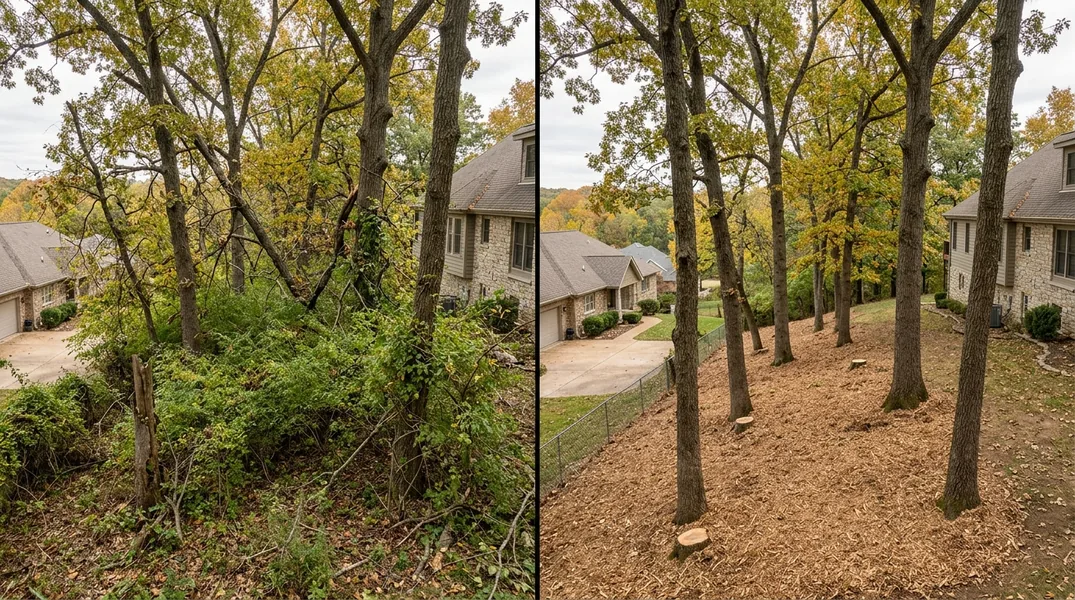
Why Bradford Pear Trees Split So Easily
Bradford pear trees have become iconic in St. Louis neighborhoods, prized for their white spring flowers and reliable fall color. However, homeowners across the region have discovered a frustrating reality: these trees are prone to catastrophic splitting, often without warning. The problem isn't a disease or pest, but rather a fundamental structural weakness built into the tree's genetics.
The issue stems from the tree's branching pattern. Bradford pears (also known as Callery pear Missouri residents plant) develop narrow branch angles where limbs meet the main trunk. These acute angles create stress points that cannot support the tree's own weight, especially as it matures. When heavy snow, ice, or strong winds load the canopy, the internal wood fibers separate along the grain, causing major limbs or even the entire crown to split apart. In many cases, a single storm can devastate a mature Bradford pear that looked healthy just hours before.
Bradford Pear Tree Splitting: When It Happens Most
Bradford pear splitting typically occurs during spring and early summer, when trees are in full leaf and carrying maximum weight. Late-season storms, particularly those with heavy wet snow or ice, create ideal conditions for failure. The added moisture weight combined with the tree's full canopy creates tremendous leverage on those weak branch angles. In St. Louis, March through June represents peak splitting season, though damage can happen any time of year.
Another common cause of Bradford pear splitting is improper maintenance. Trees that haven't been pruned correctly develop multiple competing leaders instead of a single strong central trunk. This creates even more structural instability. Additionally, Bradford pears planted too close together or in poor soil conditions may split sooner than those in ideal locations. Once a Bradford pear has experienced a major split, the tree rarely recovers fully, and repeat splitting is almost inevitable as the years pass.
Signs Your Bradford Pear Needs Removal
If you own a Bradford pear in your yard, watch for warning signs that removal may be necessary. A tree with multiple large cracks running vertically through the trunk, visible separation between major branches, or bark that's peeling away from split wood is already compromised. You might also notice that the tree leans noticeably to one side or that branches hang at odd angles after a storm. These are all indicators that Tree Removal should be considered.
Sometimes the damage is less obvious. A Bradford pear might have small internal cracks that aren't visible from the ground but are gradually weakening the entire structure. If your tree has already split once and was partially repaired, it's especially vulnerable to future failure. Additionally, if your Bradford pear is located near your home, a deck, a driveway, or where children play, the risk of a falling branch causing injury or property damage is too high to ignore. In these situations, proactive removal is the safest choice for your family.
Bradford Pear Removal Near Me: When to Call a Professional
Removing a Bradford pear, especially one that's already damaged or partially split, requires professional expertise and equipment. These trees can be unpredictable once they're compromised, and a DIY removal attempt can result in serious injury or damage to nearby structures. A experienced arborist from St. Louis Tree Service can assess your tree safely, determine whether removal is necessary, and execute the job with precision.
The best time to schedule Tree Removal is during late fall or winter when the tree is dormant and the ground is stable. However, if your Bradford pear has already split and poses an immediate hazard, Emergency Tree Service may be necessary. Don't wait for the next storm to damage your property or threaten your family's safety. Contact St. Louis Tree Service at (636) 556-6253 or request a free estimate today to discuss your options.
What to Plant Instead of Bradford Pear
Once you've removed a failing Bradford pear, you'll want to replant that space with a more reliable tree species. Fortunately, St. Louis has plenty of excellent alternatives that offer similar aesthetic appeal without the structural problems. Consider native species like the serviceberry, which provides delicate spring flowers, summer berries for wildlife, and reliable fall color. The redbud is another native favorite that thrives in Missouri's climate and has a naturally stronger branch structure than the Bradford pear.
If you want a tree with a similar size and shape to the Bradford pear you're removing, look into the Autumn Blaze red maple, the Emerald Green arborvitae, or the Sargent crabapple. These trees are hardy, long-lived, and less prone to structural failure. A professional from St. Louis Tree Service can recommend the best replacement species based on your soil conditions, sunlight, and landscape goals. Proper planting, placement, and early Tree Trimming & Pruning will help ensure your new tree grows strong and healthy for decades to come.
Bradford Pear Removal Cost in St. Louis: What to Budget
The cost of removing a Bradford pear depends on several factors, including the tree's size, its condition, accessibility, and proximity to structures. A smaller tree in an open yard with easy equipment access will cost less than a large, damaged tree growing near your home or power lines. Pricing also includes the cost of cleanup and removal of debris. If you want the stump completely eliminated, Stump Grinding is an additional service that ensures no regrowth and opens up the space for replanting.
The best way to understand what your specific removal will cost is to get a professional assessment. St. Louis Tree Service offers transparent, no-obligation estimates so you know exactly what to expect before work begins. We'll evaluate your Bradford pear's condition, discuss the safest removal approach, and provide you with a detailed quote. Call us at (636) 556-6253 or visit our website to schedule your free estimate. Investing in professional removal now can save you thousands in property damage and prevent a dangerous situation from developing.
Looking for a professional tree service contractor in St. Louis? St. Louis Tree Service responds fast for all your tree service needs.
Get a Free QuoteOur services: Tree Removal · Tree Trimming & Pruning · Stump Grinding