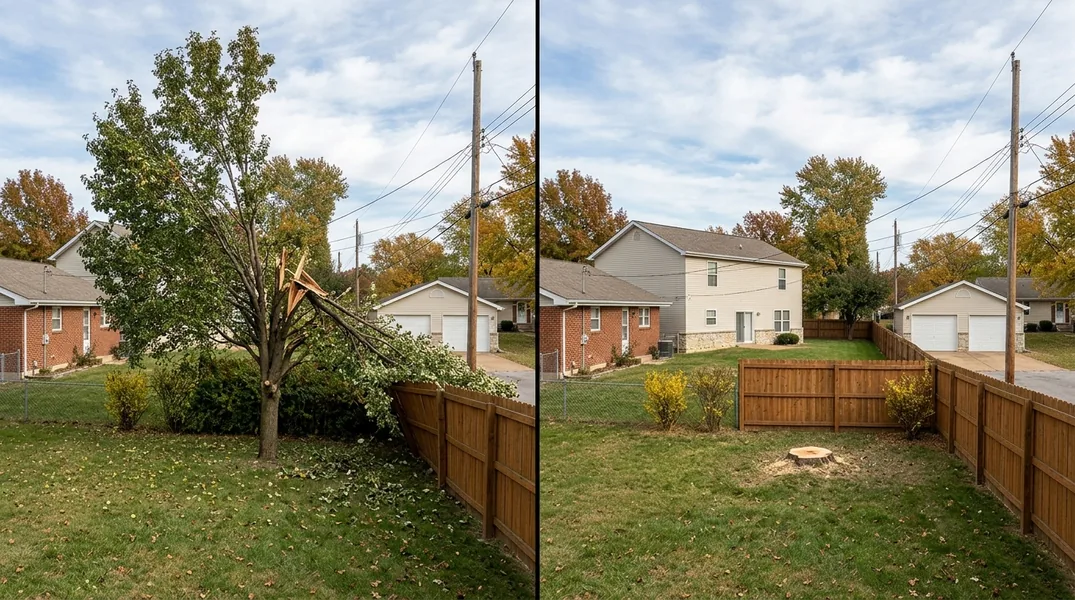
Understanding the Difference Between Tree Trimming and Removal
When you notice a tree on your property showing signs of stress, disease, or overgrowth, the question isn't always whether it needs to go. Sometimes the answer is much simpler: it just needs care. Tree Trimming & Pruning and Tree Removal are two very different services, and understanding the distinction can save you money, time, and the life of a valuable tree.
Tree Trimming & Pruning is a preventive and restorative practice that removes dead, diseased, or overgrown branches to promote healthier growth. It's a sustainable approach that keeps your tree alive while improving its structure, appearance, and safety. In contrast, Tree Removal is a last resort when a tree is beyond saving, poses an immediate danger, or has become a liability to your home. The choice between the two depends on several factors that a qualified arborist in St. Louis evaluates during a professional inspection.
Signs Your Tree Needs Trimming, Not Removal
Most trees that appear troubled can actually be saved with proper care. An experienced arborist looks for specific indicators that suggest trimming will solve the problem. If your tree has dead branches scattered throughout the canopy but the trunk and main limbs are still healthy, trimming is almost always the right choice. Dead wood doesn't recover, but removing it allows the tree to redirect energy to living tissue and new growth. Similarly, if branches are rubbing against your roof, power lines, or hanging dangerously over a deck or driveway, strategic pruning can eliminate the risk without sacrificing the entire tree.
Disease and pest damage are also manageable in many cases. Early-stage fungal infections, insect infestations, or storm damage affecting only portions of the canopy can often be controlled through targeted trimming. An arborist will remove infected or infested branches, improving air circulation and sunlight penetration, which naturally strengthens the tree's immune system. If your tree is simply overgrown, crowding your yard or blocking views, trimming restores balance and aesthetics while keeping your tree thriving. In St. Louis, where trees are essential to neighborhood character, preserving healthy specimens through proper pruning is almost always preferable to removal.
When Tree Removal Near Me Becomes Necessary
There are situations where even the most skilled arborist must recommend Tree Removal. The most obvious scenario is when a tree is dead or dying. If the majority of the canopy is bare, the bark is peeling away, or there are no signs of new growth in spring, the tree has likely reached the end of its life. Attempting to trim a dead tree won't restore it, and leaving it standing creates safety hazards, including falling limbs and potential structural failure during storms.
Severe structural defects also warrant removal. A tree with a major split in the trunk, severe lean, or roots that are damaging your foundation or lifting your driveway poses genuine risk. Storm damage that removes a large portion of the canopy or causes significant trunk damage may be beyond recovery. Additionally, if a tree is infested with wood-boring insects like emerald ash borers or shows advanced signs of disease like Dutch elm disease, removal may be the only way to protect other trees on your property and in your neighborhood. Finally, if a tree's location makes it incompatible with your property's future plans, or if it's consistently dropping hazardous debris, removal provides a clean solution.
How a St. Louis Arborist Evaluates Your Tree
A experienced arborist doesn't make the trimming versus removal decision lightly. The evaluation process is systematic and thorough. First, they assess the tree's overall health by examining the bark, trunk, major branches, and canopy structure. They look for signs of disease, pest activity, and structural weakness. They'll also consider the tree's age, species, and how well it's suited to your St. Louis property and climate zone.
Next, they evaluate safety. Does the tree pose a risk to your home, power lines, or neighboring properties? Are there hazardous branches that could fail in the next storm? They also consider the tree's location relative to your house, driveway, and other structures. An arborist will inspect the root system for signs of damage, disease, or poor anchorage. Finally, they discuss your goals with you. Do you want to preserve the tree if possible? Are you concerned about specific issues like shade, fruit drop, or maintenance? This conversation helps guide their recommendation. When you call St. Louis Tree Service at (636) 556-6253, our arborists conduct this same thorough evaluation to give you honest, expert advice tailored to your situation.
The Cost Difference: Tree Trimming vs. Tree Removal in St. Louis
Budget is always a consideration for homeowners. Generally, Tree Trimming & Pruning costs significantly less than Tree Removal. A routine trimming session might range from a few hundred dollars to over a thousand, depending on tree size, complexity, and accessibility. Removal, on the other hand, involves felling the tree, cutting it into manageable pieces, hauling debris, and often includes Stump Grinding to eliminate the stump entirely. This comprehensive process typically costs more and can involve heavy equipment and multiple visits.
However, thinking only about upfront cost misses the bigger picture. Investing in regular trimming prevents future problems, extends your tree's lifespan, and can prevent costly damage to your property. A tree that receives preventive care every three to five years is far less likely to become a removal candidate. When you're weighing your options, request a free estimate from St. Louis Tree Service to understand the actual pricing for your specific situation. Our team will explain what's needed and why, helping you make an informed decision that protects both your trees and your wallet.
Making the Final Decision: What Your Arborist Recommends
After a thorough evaluation, your arborist will provide a clear recommendation. This recommendation is based on professional standards, your tree's condition, safety concerns, and your property's unique circumstances. A reputable arborist will explain their reasoning in plain language, not industry jargon. They'll tell you why they believe trimming will work or why removal is necessary. They should also discuss your options if you're uncertain, such as scheduling a follow-up inspection in six months or trying a limited trimming approach to see if the tree responds positively.
Trust matters in this decision. When you work with an experienced professional from St. Louis Tree Service, you're getting advice from someone who has evaluated hundreds of trees and understands the specific challenges of our local climate and landscape. If you're unsure about your tree's future, don't wait until a problem becomes critical. Contact us at (636) 556-6253 or request a free estimate today. Our experienced arborists are ready to assess your tree and provide honest, professional guidance to help you make the best choice for your property and your trees.
Looking for a professional tree service contractor in St. Louis? St. Louis Tree Service responds fast for all your tree service needs.
Get a Free QuoteOur services: Tree Removal · Tree Trimming & Pruning · Stump Grinding